Activated Carbon
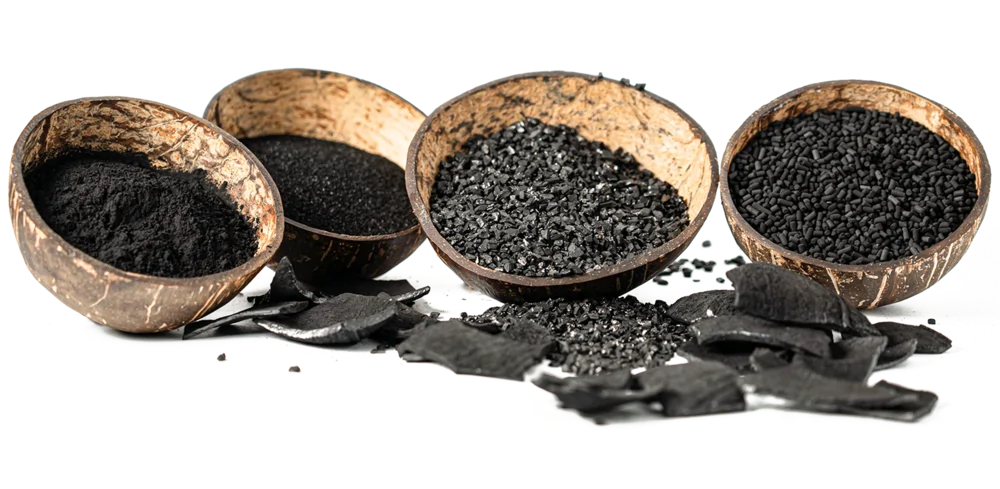
Activated carbon (also called activated charcoal, activated coal or active carbon) is a very useful adsorbent. Due to their high surface area, pore structure (micro, meso and macro), and high degree of surface reactivity, activated carbon can be used to purify, dechlorinate, deodorize and decolorize both liquid and vapor applications. Moreover, activated carbons are economical adsorbents for many industries such as water purification, food grade products, cosmetology, automotive applications, industrial gas purification, petroleum and precious metal recovery mainly for gold. The base materials for activated carbons are coconut shell, coal or wood.
Types of activated carbon
Coconut shell-based activated carbon
The very large internal surface areas characterized by microporosity along with high hardness and low dust make these coconut shell carbons particularly attractive for water and critical air applications as well as point-of-use water filters and respirators
- Very high surface area characterized by a large proportion of micropores
- High hardness with low dust generation
- Excellent purity, with most products exhibiting no more than 3-5% ash content.
- Renewable and green raw material.
Coal-based activated carbon
Demand is typically high for this relatively low cost filter media for both gas and liquid applications. Coal based activated carbon has a high surface area characterized by both mesopores and micropores.
- Consistent density
- Hard materials with minimal dust generation.
- Economical
Wood based activated carbon
It produces different performance characteristics in industrial applications typically catered to with coal or coconut products.
Wood based activated carbon has a high surface area characterized by both mesopores and micropores and has excellent decolorizing properties owing to its signature porosimetry
- Relatively low density
- Renewable source of raw material
Catalytic based activated carbon
Catalytic carbon is a class of activated carbon used to remove chloramines and hydrogen sulfide from drinking water.
It has all the adsorptive characteristics of conventional activated carbons, as well as the ability to promote chemical reactions.
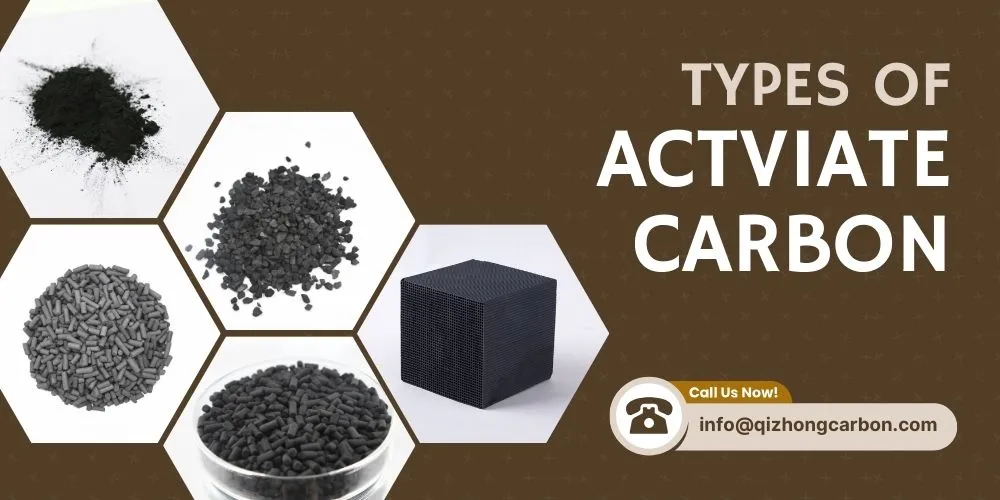
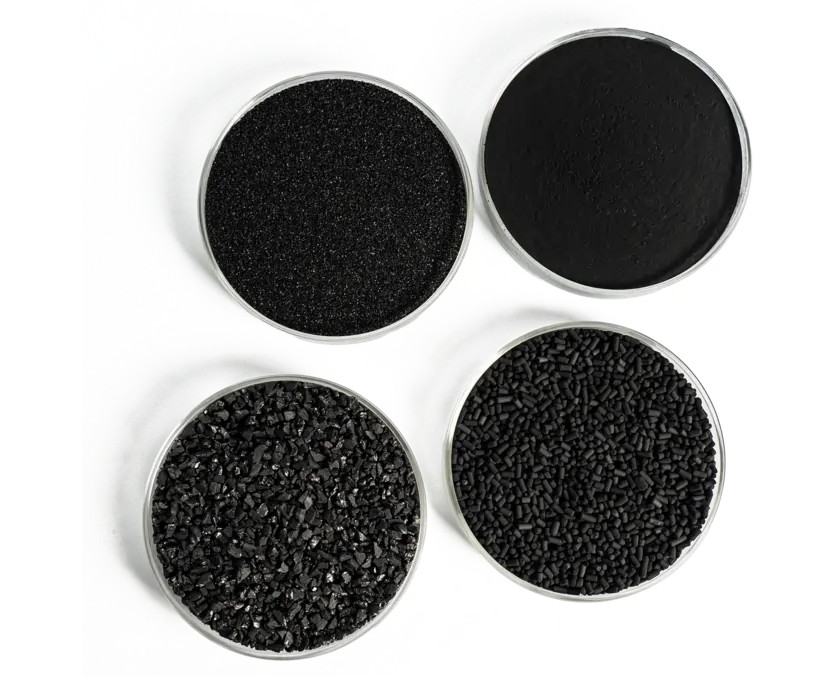
Activated carbon is available in a variety of forms, each designed for specific purposes. These include:
Granular Activated Carbon (GAC)
These carbon particles are granular in form, with a relatively coarse texture. It is widely used in continuous flow systems, such as water treatment plants and air purification systems. GAC minimizes pressure drop while maintaining high adsorption efficiency.
Powdered Activated Carbon (PAC)
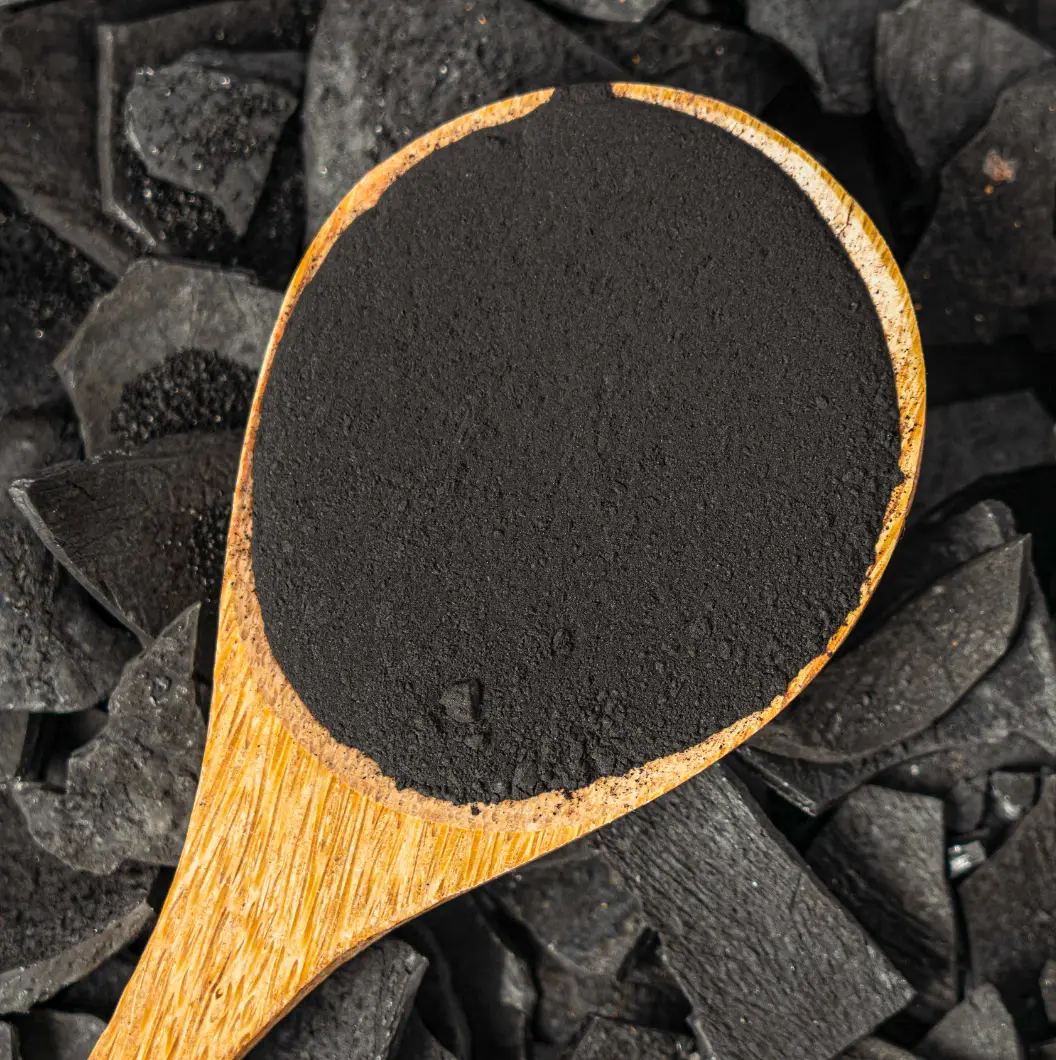
Powdered Activated Carbon is a fine material with small particle sizes, making it ideal for rapid adsorption in batch processes. It is commonly employed in emergency water treatment, chemical spill responses, and industrial applications requiring swift contaminant removal.
Extruded (Pelletized) Activated Carbon
Extruded Activated Carbon is formed into uniform cylindrical pellets, offering superior hardness and low dust levels. This makes it suitable for gas-phase applications such as air purification, volatile organic compound (VOC) control, and odor elimination. Its consistent shape ensures ease of handling and performance predictability.
Solid Carbon Monoliths
Solid Carbon Monoliths are rigid structures with interconnected pores, designed for applications requiring high flow rates and minimal pressure drops. They are particularly effective in industrial exhaust treatment and other high-demand scenarios.
Properties of Activated Carbon
High Surface Area
Activated carbon has an extremely high surface area per unit volume, typically ranging from 500 to 1500 m²/g. This extensive surface area is due to its highly porous structure, allowing it to adsorb significant amounts of substances relative to its size.
Pore Structure
The efficacy of activated carbon largely depends on its pore size distribution, which includes micropores (less than 2 nm), mesopores (2-50 nm), and macropores (greater than 50 nm). This varied pore structure enables it to trap various contaminant molecules.
Adsorption Capacity
Due to its porous texture and surface chemistry, activated carbon can adsorb various organic molecules and some inorganic gases. This makes activated carbon highly effective in purifying liquids and gases by removing unwanted substances.
Why Choose Activated Carbon?
Cost Effectiveness
Due to its extensive pore structure and high efficiency in contaminant removal, activated carbon is a cost-effective adsorbent material. Its ability to be regenerated and reused multiple times makes it even more affordable, reducing the need for frequent replacements and lowering long-term operational costs.
Environmental Benefits
Activated carbon is essential for protecting the environment. It greatly minimizes pollution and cleanses air and water. It efficiently captures harmful pollutants and toxins, creating cleaner and safer surroundings. Additionally, activated carbon production utilizes natural waste materials like coconut shells, wood, and coal, supporting waste reduction and resource reuse while improving its environmental sustainability.
Versatility
Activated carbon is highly versatile and capable of adapting to various adsorption applications. This adaptability makes it invaluable across multiple industries, including water treatment, air purification, gold recovery, energy storage and chemical processing. Its variety in forms – such as granular, powdered, and pelletized – allows it to be customized for specific uses, ensuring optimal performance in diverse settings.
Selecting Activated Carbon for Your Application
Different shapes of activated carbon and system design
Activated carbon comes in various shapes – granular, powdered and pelletized – each optimized for different systems and applications. Granular activated carbon (GAC) is suited for water treatment because it can handle lower pressure drops and higher flow rates. Powdered activated carbon (PAC) is ideal for batch processes or rapid adsorption needs like waste treatment. Pelletized carbon, known for its high density, uniform particle size and low dust content, is preferred for air purification, where minimal pressure drop is crucial. Effective carbon selection must also consider system design, including factors such as flow rate, contact time, and the type of bed (fixed, moving, or fluidized), to ensure optimal interaction with contaminants and prolong system efficiency and durability. Therefore, the selection of activated carbon must be aligned with both the physical properties of the carbon and the specific operational parameters of the system it will be utilized in.
Particle size and adsorption kinetics
Particle size directly influences the flow dynamics and pressure drop across the carbon bed; smaller particles typically provide a larger surface area but can also lead to higher pressure drops, which might be undesirable in applications with flow limitations. On the other hand, adsorption kinetics, which describes the rate at which contaminants are removed from the fluid being treated, is crucial for ensuring efficient purification. Faster kinetics are generally preferred, as they allow for quicker contaminant removal, which can be essential in applications requiring rapid processing times.
Pore size distribution and other parameters
Selecting activated carbon based on pore size distribution is essential for aligning the carbon’s properties with specific adsorption needs. Pore sizes are divided into micropores (less than 2 nm), mesopores (2-50 nm), and macropores (over 50 nm). With its extensive surface area, microporous carbon is ideal for adsorbing small molecular contaminants like gases and volatile compounds. Mesoporous and macroporous carbons are more suitable for larger molecules in liquid-phase applications, such as colors and odors.
In addition to pore size, other crucial factors include total surface area, pore volume, and the surface’s chemical nature. These factors impact the carbon’s affinity for various contaminants and overall adsorption capacity. Ensuring compatibility between the carbon’s properties and the specific contaminants and medium is vital for effective purification.